
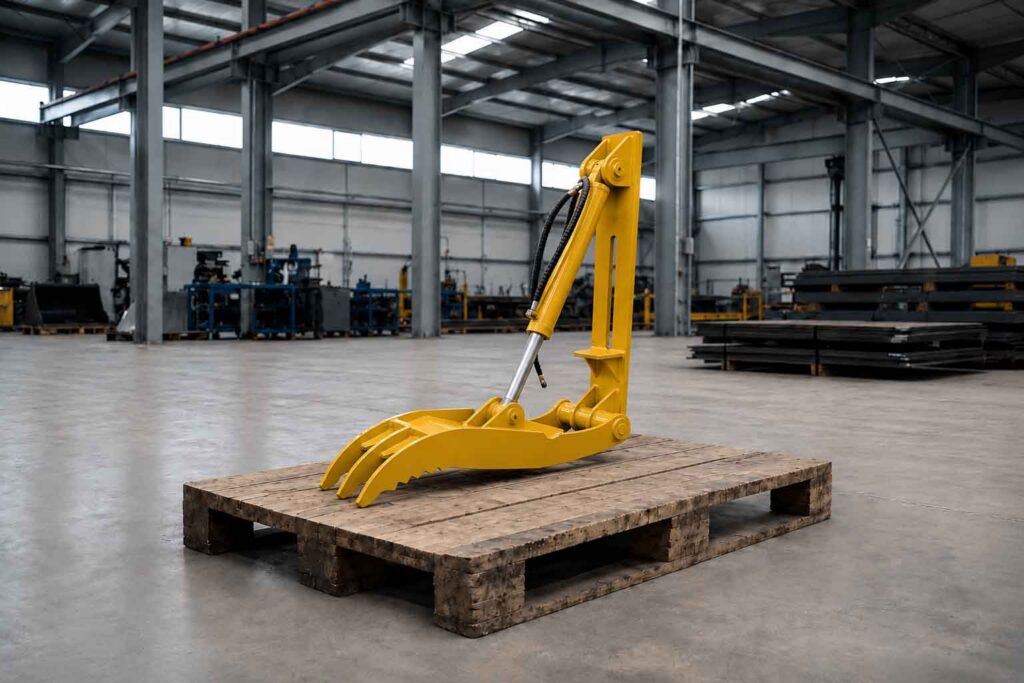
Hydraulic thumb for excavators that need stronger bucket control around rocks, logs, roots, and mixed material handling.
Product Overview
A hydraulic thumb order starts with one practical question: how does the bucket close against the thumb? Machine size matters, but it is not enough. The arm position, bucket shape, thumb reach, pin area, and hydraulic setup all need to work together before the build can move forward.
Hydraulic thumb supply is checked for movement, contact, and mounting position. A clean match here matters more than adding a thumb by machine size alone.
The thumb movement is checked around the cylinder stroke, opening range, and the way the bucket closes on material.
Thumb teeth, bucket edge, and contact angle are matched so the grip does not sit too high or too far forward.
Arm photos, mounting space, and bracket position help decide whether the thumb can sit in the right working area.
Thumb Uses
Hydraulic thumb requests often come from jobs where material is irregular and the bucket needs more control than a fixed hold can give.
Useful when the bucket needs to hold loose rock, broken material, or site debris during clean-up work.
Hydraulic thumb gives more control when handling logs, roots, brush, or uneven material on land-clearing jobs.
Works well when the operator needs to pick, hold, move, and release material with more control from the cab.
A hydraulic thumb has to follow the bucket path. If the thumb sits in the wrong place, the machine may still move, but the grip will feel poor in use.
Excavator model, operating weight, arm layout, and available mounting space give the first useful reference.
The bucket shape and thumb reach should meet where the material is actually held, not behind or above the grip point.
Cylinder travel, hose position, and working clearance need enough space through the full open-and-close movement.
Clear photos are often more useful than a long written description. For a hydraulic thumb, the arm, bucket, pin area, and hydraulic preparation need to be visible.
Send the excavator brand, model, operating weight, and side photos of the arm and current bucket setup.
Share bucket width, bucket side photos, and the kind of material the bucket needs to hold.
Provide pin diameter, pin centres, arm width, and any mounting measurements or drawings already available.
Send photos of the auxiliary hydraulic lines, control or valve preparation, hose connection points, and any known pressure or flow information for the available circuit.
Used in Package
For 2–5T mini excavators that need a matched bucket and mechanical thumb where auxiliary hydraulics are unavailable or not required, subject to fitment review.
Our Products
Bucket shape affects how the thumb closes, so bucket photos are useful when checking a hydraulic thumb request.
Some machines also need attachment changeover, but coupler use should be checked against the thumb and bucket setup.
A ripper may be used before bucket-and-thumb work when roots, stumps, or compacted ground need opening first.
Product Inquiry
Send the machine model, arm photos, bucket photos, pin details, hydraulic setup, and the material you need to handle. We will check whether a hydraulic thumb is suitable before quote.
© [2026] · All Rights Reserved · Manufacturing & Export Business